History & Genealogy
Castlelyons has many layers of history: a landscape organised through townlands, medieval religious and secular foundations, centuries of parish and farming life, local industry, and a strong tradition of community memory. This page introduces that wider story and offers practical starting points for tracing Castlelyons families.
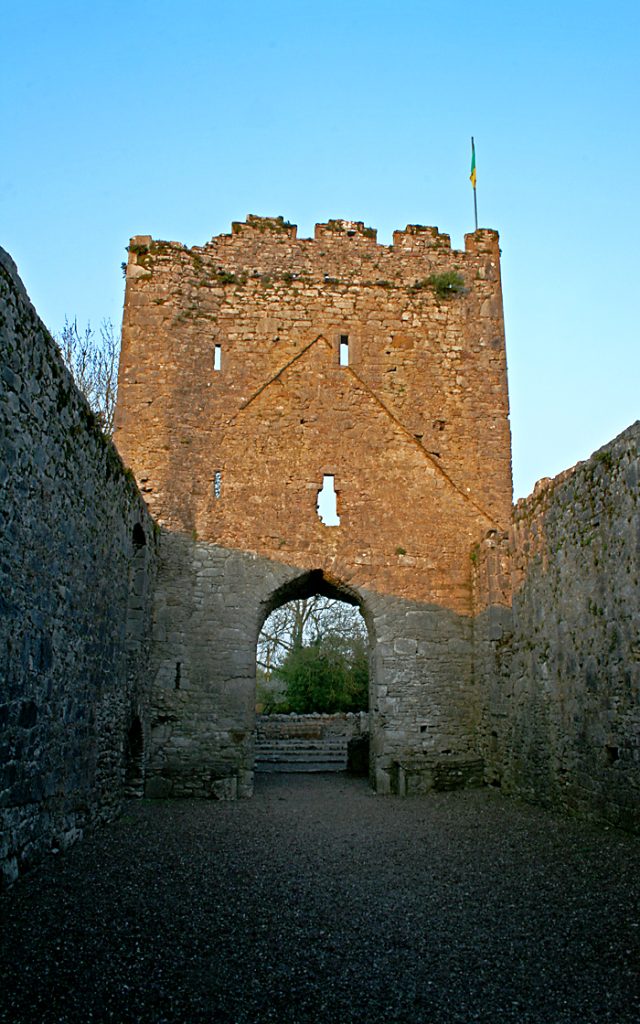
Detailed accounts of individual ruins, churches and monuments are kept on Local Heritage. Curated historic photographs are collected in the Photo Archive.
The name Castlelyons
Castlelyons · Caisleán Ó Liatháin
The official Irish form recorded by the Placenames Database of Ireland is Caisleán Ó Liatháin. Logainm records Castlelyons as both a town and a civil parish in County Cork, within the barony of Barrymore.
The modern English name and the official Irish form are useful search terms in maps, catalogues and historical records. Researchers should avoid assuming that every older spelling refers to exactly the same boundary or administrative unit.
Early landscape and settlement
Long before the modern village took shape, the district was a rural landscape of townlands, fields, waterways and routes between settlements. Townland names remain especially important: they locate farms and homes, distinguish families with the same surname, and connect civil, church, census and valuation records.
The former parish archive collected accounts of ringforts, a souterrain and other archaeological discoveries in the wider parish. Those accounts show the depth of local interest in the landscape. For reliable research, individual sites should be matched with the National Monuments Service record and their correct townland before locations or dates are published.
Townlands
A townland can be more useful than the village name alone when searching census returns, parish registers, valuations and burial records.
Farming landscape
Agriculture shaped work, settlement and family life for generations. Fields, farmsteads and local routeways also influenced how the community connected with Fermoy and neighbouring districts.
Medieval Castlelyons
The abbey and castle give Castlelyons a distinctive medieval and early-modern setting. Logainm records Castlelyons Abbey as Prióireacht Chaisleán Ó Liatháin, in the townland of Mohera/An Machaire. The local archive links the castle and later residence with the Barry family, whose title of Barrymore is also preserved in the name of the surrounding barony.
The surviving ruins are best understood as parts of a connected landscape rather than isolated attractions: religious foundations, lordship, burial places, roads, cultivated land and later village development all occupied the same setting. The archive’s detailed stories about the castle and abbey provide valuable research leads, while the physical remains and official monument records provide the foundation for future interpretation.
For descriptions and visitor context for Castlelyons Abbey, Barrymore Castle and other physical sites, continue to Local Heritage rather than relying on this overview alone.
Churches, parish and cemeteries
Church sites and burial grounds connect architectural history with the history of families. The National Inventory of Architectural Heritage describes the roofless Castlelyons Church of Ireland church as an eighteenth-century building constructed within the ruins of a medieval church. Its record identifies a medieval tower, later church fabric, carved stonework and an important group of grave markers.
The same graveyard contains monuments associated with the Barrymore and Peard families. NIAH records the Peard mausoleum as a mid-eighteenth-century structure and notes the relationship between its Gothic Revival character, the church and the other funerary monuments.
The local archive also organised material around St Nicholas Church and graveyards at Castlelyons, Coole, Britway and Killawillin. For family historians, burial places may provide names, dates, relationships and townland clues—but inscriptions should be read carefully, photographed respectfully and compared with documentary records.
Parish records
Registers of baptism, marriage and burial can bridge generations and help distinguish people with similar names.
Cemetery evidence
Headstones, mausoleums and burial registers can add family relationships, residences and commemorative details that do not appear elsewhere.
Castlelyons in later centuries
The nineteenth- and twentieth-century archive shifts attention from monuments to everyday life. Census-based notes describe substantial change in population and housing around the Great Famine, while village listings show homes alongside workshops, a school, policing and postal functions. These records place national events within a local landscape of streets, lanes and townlands.
Agriculture and local industry
Farming remained central, but the village also supported processing, storage, trades and services. Buildings of Ireland records Barrymore Barn as a large warehouse or store built around 1830, whose scale adds an industrial character to Main Street.
Creamery and co-operative life
The old archive treats the creamery and co-operative as important parts of local agricultural and working life. Photographs of the complex preserve a record of a changing village economy.
Schools and learning
Archive pages and photographs record local schools and former school buildings. School records, roll books and class photographs can be valuable sources, provided access, copyright and the privacy of living people are respected.
Roads and community facilities
Roads, halls, recreation spaces and other shared facilities reveal how the settlement adapted over time. They belong to community history as much as to the physical history of buildings.
Community development
Community Council material records that organised community-development activity began in Castlelyons in 1962 under Muintir na Tíre. The same historical material describes a later evolution into Castlelyons Community Council and a continuing emphasis on local participation.
Across the archive, volunteers appear in the care of shared spaces, community facilities, cultural activity, environmental improvements and local events. These records are valuable not because every former committee still exists, but because they show how residents repeatedly organised around practical needs and shared ambitions.
A continuing local tradition
Community history is made not only through formal organisations but through the work of people who maintain places, preserve photographs, record memories, support neighbours and pass knowledge between generations.
People and local memory
A local-history page also needs room for people whose lives connect Castlelyons with wider events. Profiles should be based on reliable evidence and should avoid turning family memory into unsupported biography.
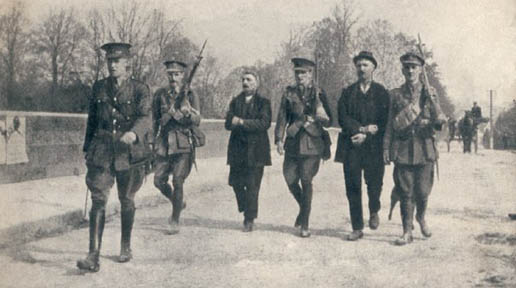
Thomas Kent and 1916
Thomas Kent was born in 1865 and was arrested at his home in Castlelyons during the events of 1916. Following court martial, he was executed at Cork Detention Barracks on 9 May 1916. His Castlelyons connection gives the national story of the Rising a direct local dimension.
The former parish archive contains longer material on the Kent family, Bawnard and local commemorations. A fuller profile should continue to distinguish official records from later recollection.
The Photo Archive offers another route into local memory: buildings, gatherings, sport, work and everyday scenes can prompt identification and stories, but names and captions should be added only with appropriate evidence and consent.
Researching your Castlelyons roots
Begin with what is known at home: names, approximate dates, religious denomination, occupations, townlands and relationships. Record where each fact came from. Then move between civil records, parish registers, census returns, valuations, burial evidence and maps, checking that records refer to the same person.
Civil records
IrishGenealogy.ie provides historic civil-register indexes and images within published coverage and privacy limits. Civil registration began with non-Roman Catholic marriages in 1845 and expanded to births, marriages and deaths in 1864.
Census and archival sources
The National Archives genealogy service provides the 1901 and 1911 censuses, surviving earlier census material, Tithe Applotment Books, wills and other searchable collections.
Parish registers
The National Library of Ireland’s Castlelyons parish page provides digitised Catholic registers for the Diocese of Cloyne, including baptism and marriage volumes from the late eighteenth and nineteenth centuries.
Townlands and placenames
Logainm supplies official Irish and English placenames and administrative context. Search both spellings and note the townland attached to every record.
Cemeteries and inscriptions
Historic Graves and other properly documented surveys may help locate inscriptions. Always check the graveyard identity and compare transcriptions with images or registers.
Cork local studies
Cork Local Studies provides routes into maps, local publications, valuation material, census resources and the Cork placename survey.
Old photographs and local knowledge
A photograph may identify a house, occupation, uniform, event or generation. Write down who supplied the identification and how they know. Local recollection is valuable evidence, but it should be labelled as recollection until it can be matched with a record.
Genealogy enquiries
The former parish website accepted genealogy questions through a public guestbook. That guestbook is now a private archive and is not being republished. The new approach will keep enquiries private and route them through Submit to the Community once the form and review process are operational.
A useful enquiry should include the person or family name, approximate dates, known townland or parish, religious denomination where relevant, known relatives, and the records already checked. Do not submit sensitive information about living people. Nothing will be published automatically, and a reply will depend on volunteer availability and the surviving records.
Genealogy enquiry — private submissions will open when Submit to the Community is ready.
Explore Castlelyons
Local Heritage
Explore the abbey, castle, churches, cemeteries and other physical traces of the past.
Photo Archive
Browse curated photographs of places, buildings and community life across the local archive.
Submit a Genealogy Enquiry
Prepare a private family-history question for the future submission workflow.
Genealogy enquiry
Sources and continuing research
This page draws on the downloaded Castlelyons parish archive, historical Castlelyons Community Council material, the Placenames Database of Ireland, Buildings of Ireland, the National Archives of Ireland, the National Library of Ireland, IrishGenealogy.ie and Cork County Library’s local-studies guidance. It will continue to be refined as records are checked and properly sourced local contributions become available.